2026
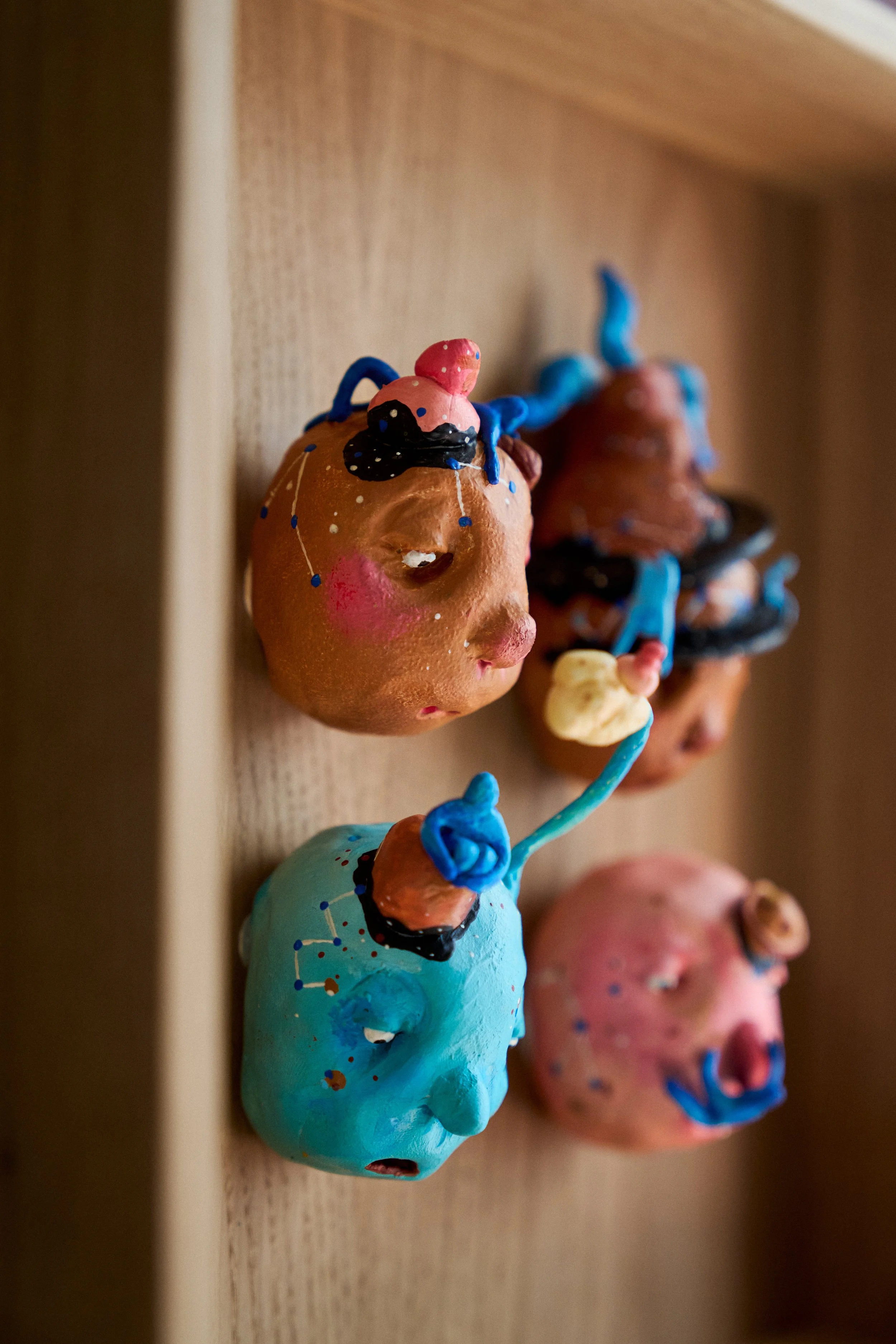
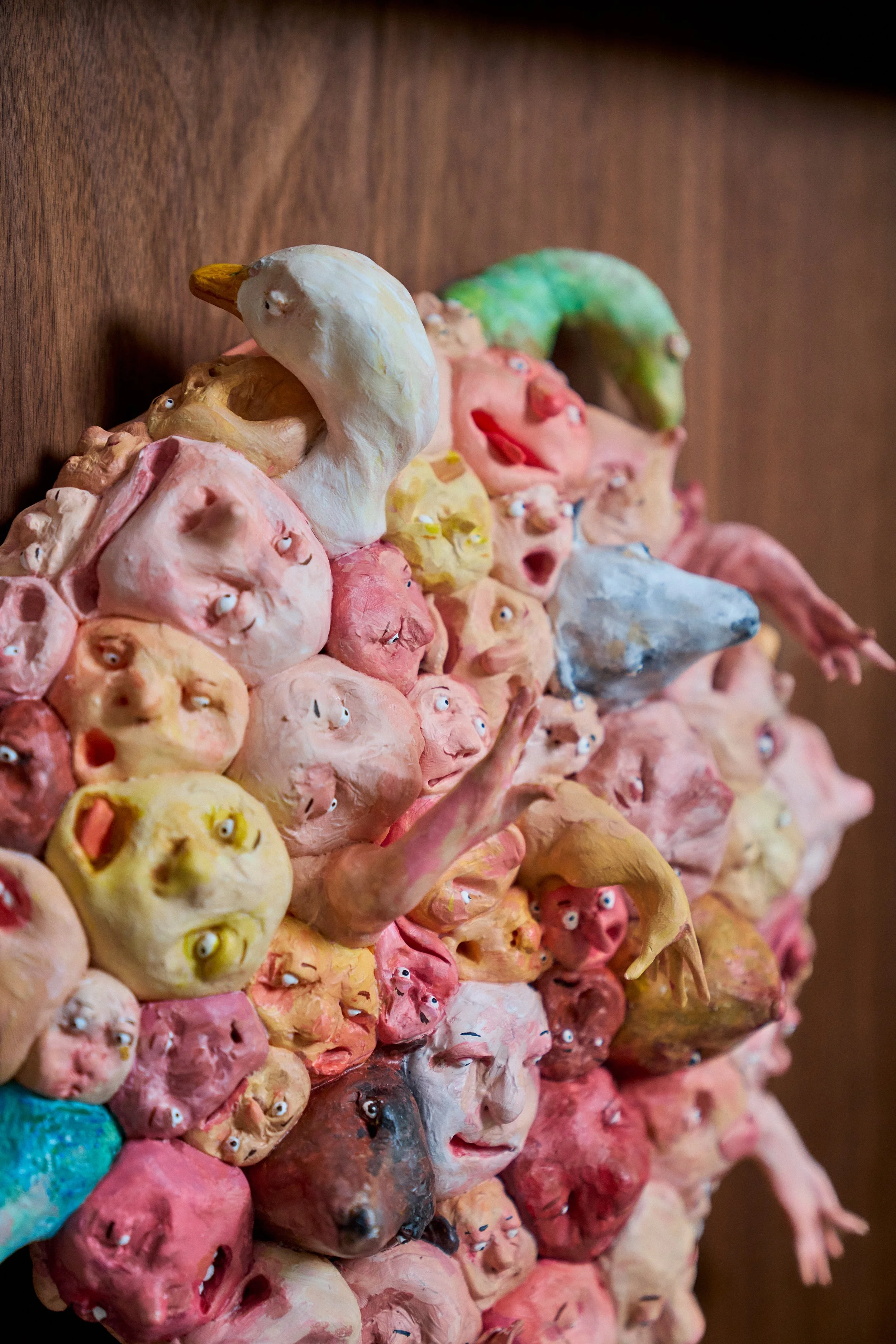
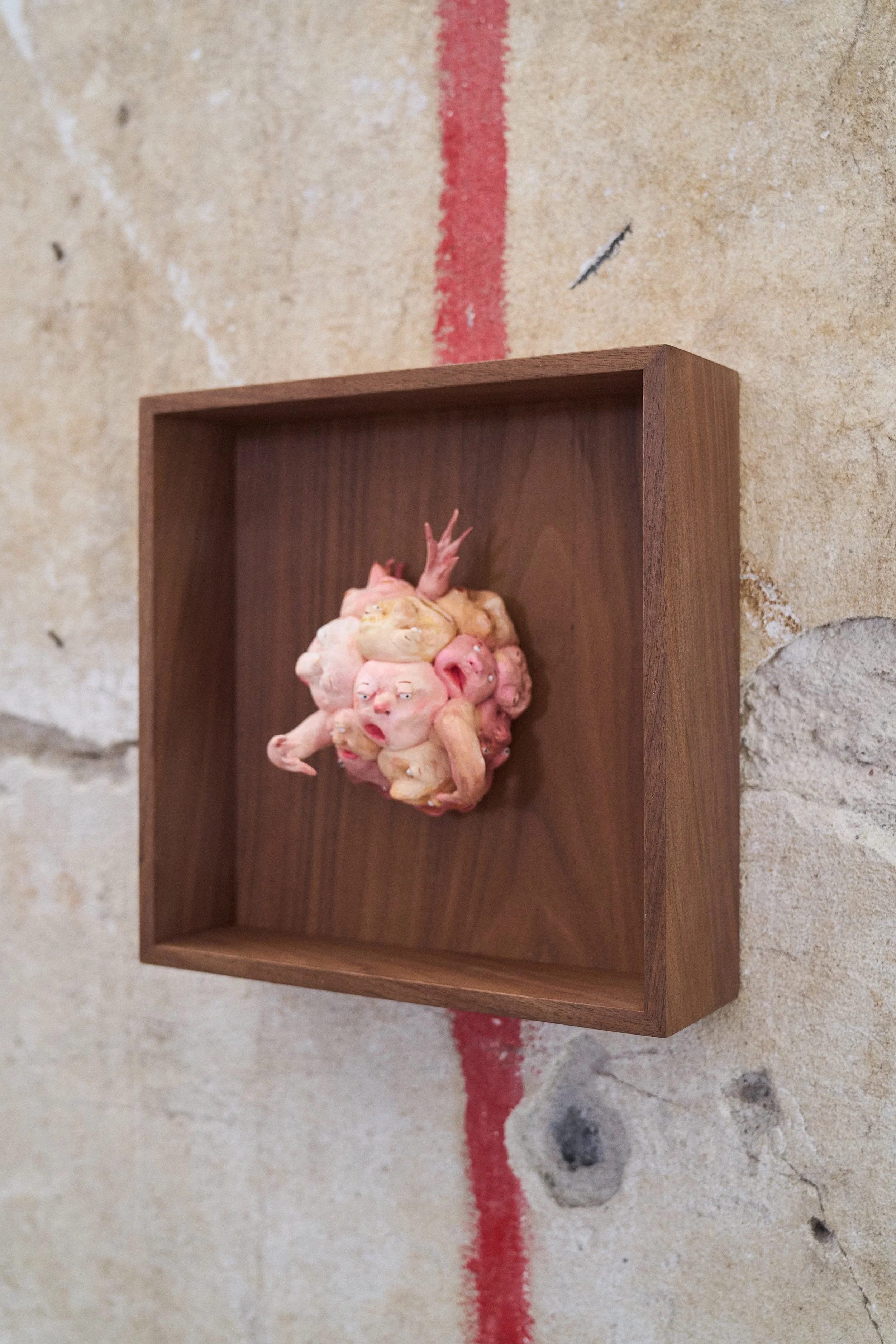
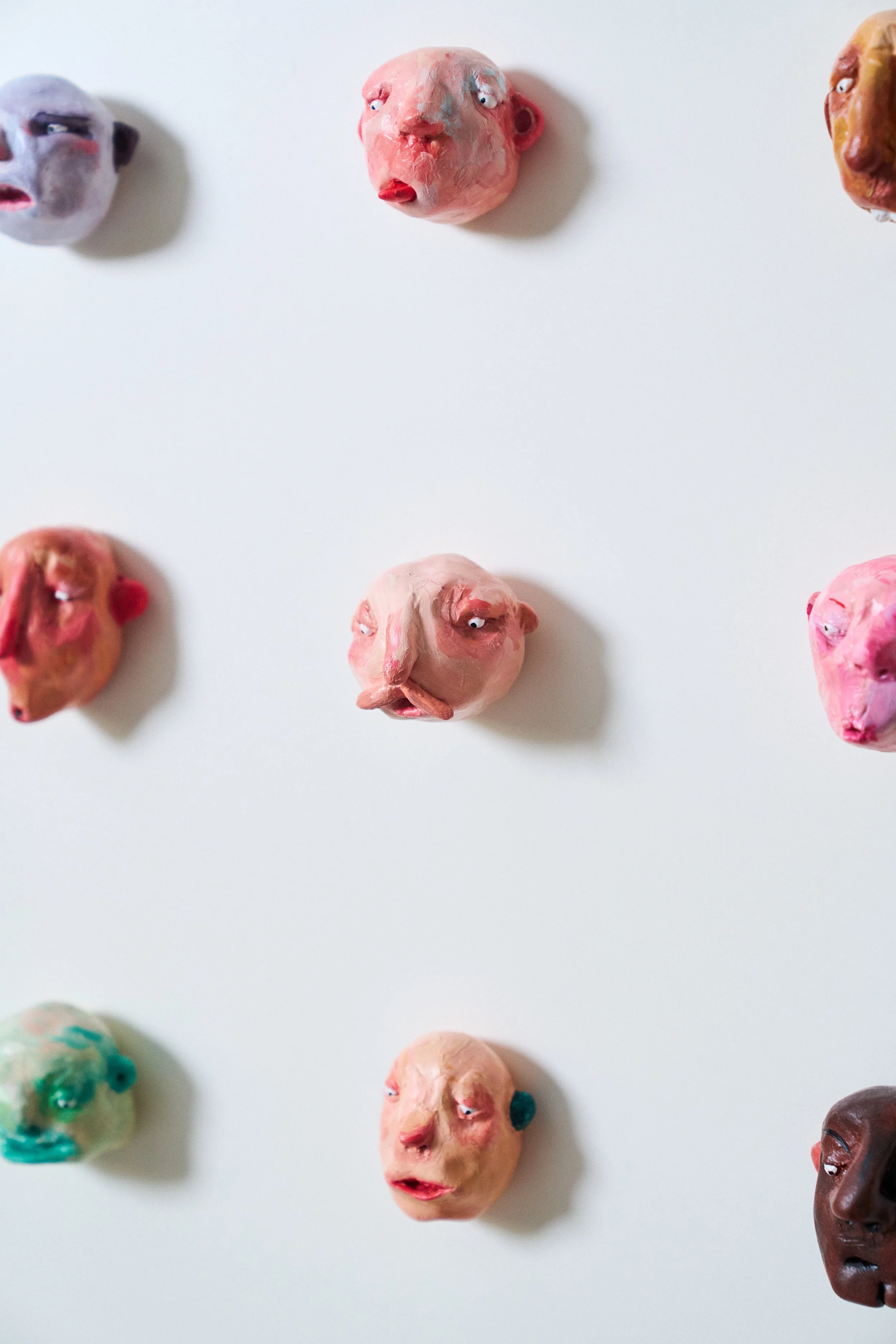
Inner Head stems from an almost obsessive focus on the miniature “head” and its multiplication, where individual identity loses its relevance. Instead, emphasis is placed on expression, repetition, and meticulous detail, reinforced by the use of colour, which oscillates between contrast and subtlety.
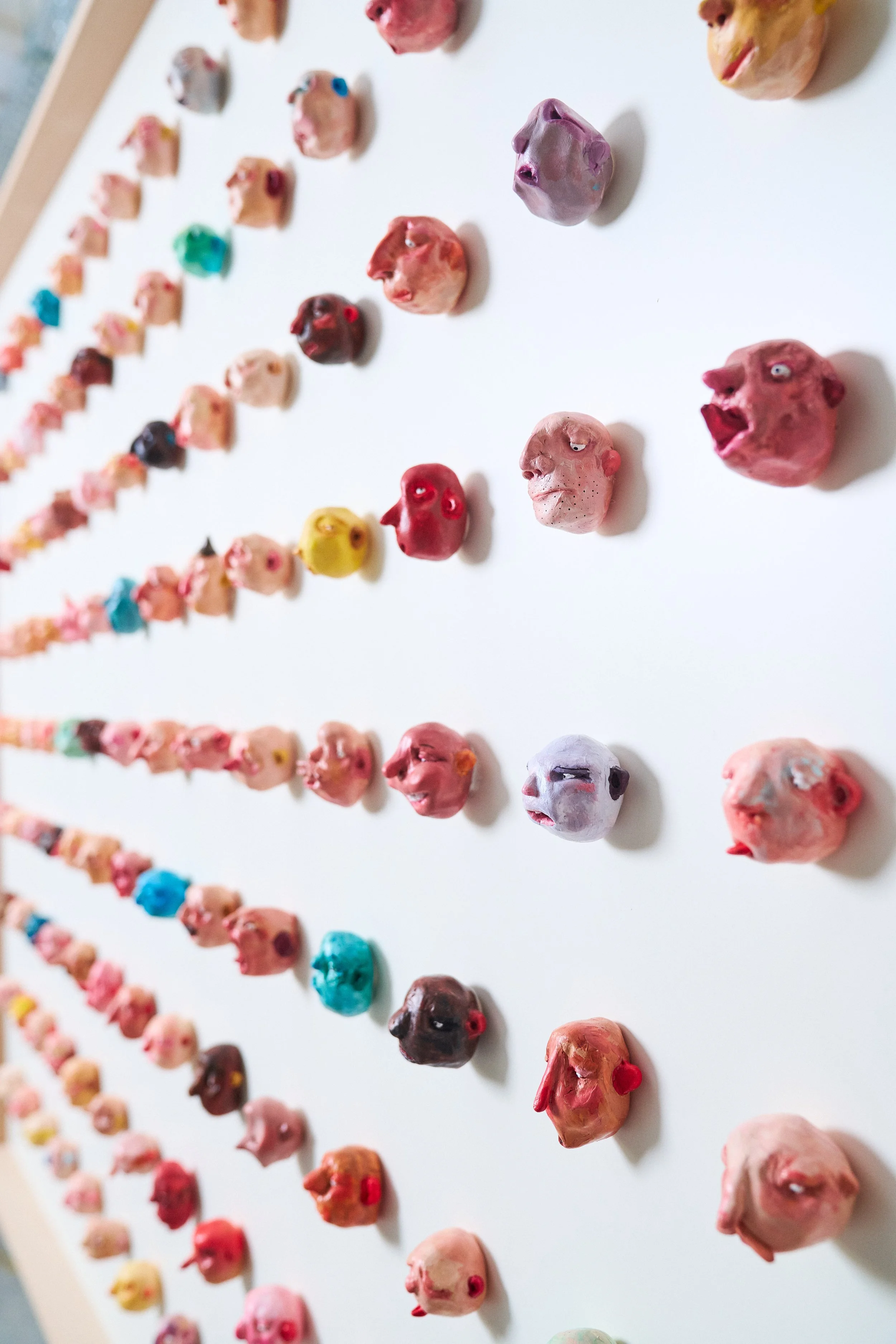
In this series, the heads take centre stage through the static and organised way in which they are presented as a group, yet they reveal themselves as intensely expressive, emotional, and sensory when observed individually, “head by head.” It does not matter who they are, their gender, or their name; what matters is capturing the emotion of each one, its immediate expression. The colour, present in all the pieces, does not aim at realism but instead translates inner sensations.
The purpose of these works unfolds through a dual experience of perception: on the one hand, they invite a global appreciation, supported by a broad view in which a refined geometric structure becomes evident, based on pre-established vertical and horizontal axes, approaching a near-systematic logic of standardisation.
On the other hand, they demand time. They require from the viewer a slow and almost exhaustive attention. The gaze is thus compelled to move closer and to traverse the work in detail, in a meticulous “head by head” examination, in a gesture that is almost akin to the obsession embedded in its conception.
Each unit, although integrated into a cohesive whole, asserts itself as an expressive singularity, forming an ensemble whose quantitative variation ranges, from work to work, between approximately 20 and 189 elements.
Taken as a whole, Inner Head establishes itself as an exercise in tension between the whole and the part, between order and intensity, where repetition does not dilute individuality but rather reveals it, compelling the viewer’s gaze to continuously oscillate between distance and proximity.
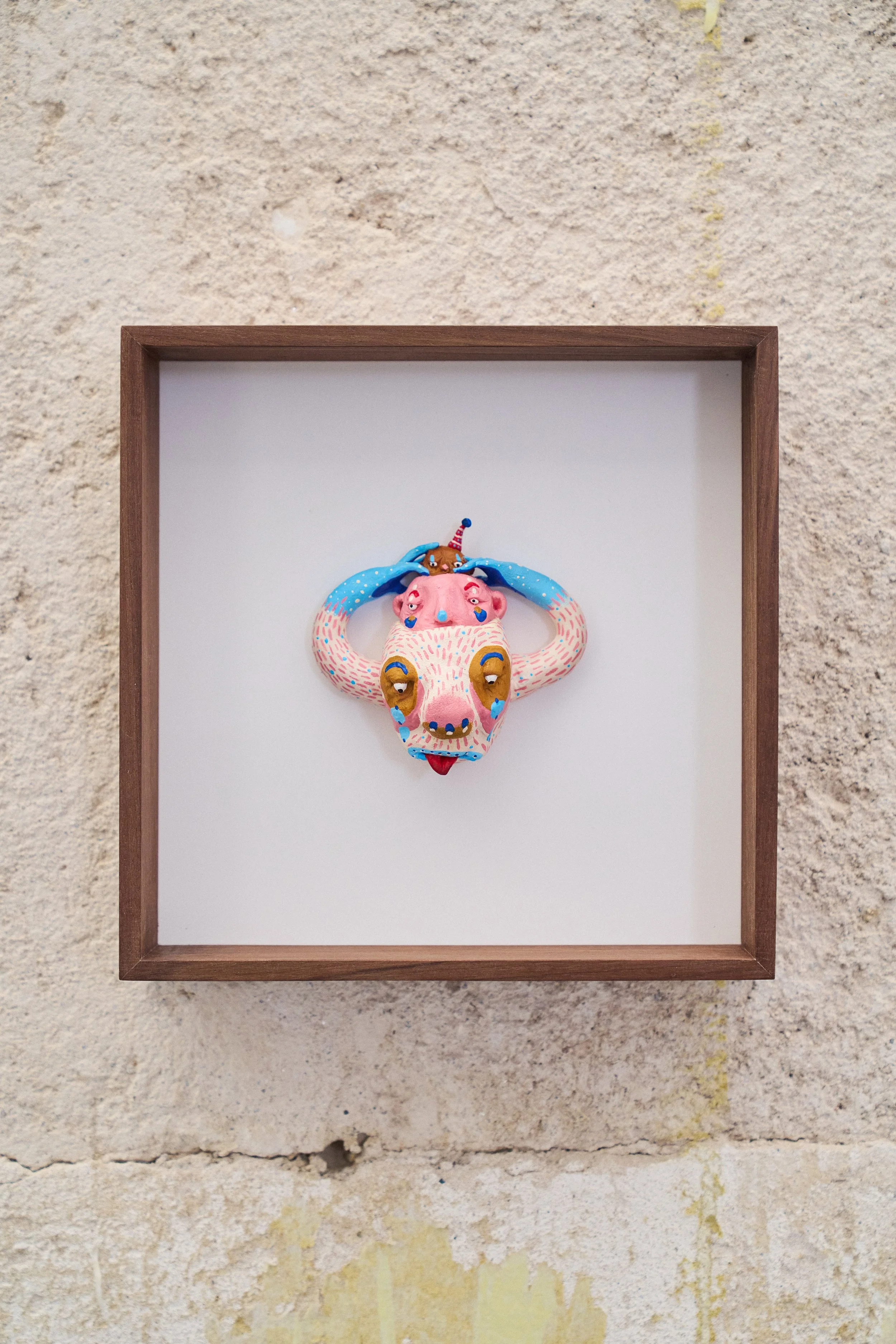
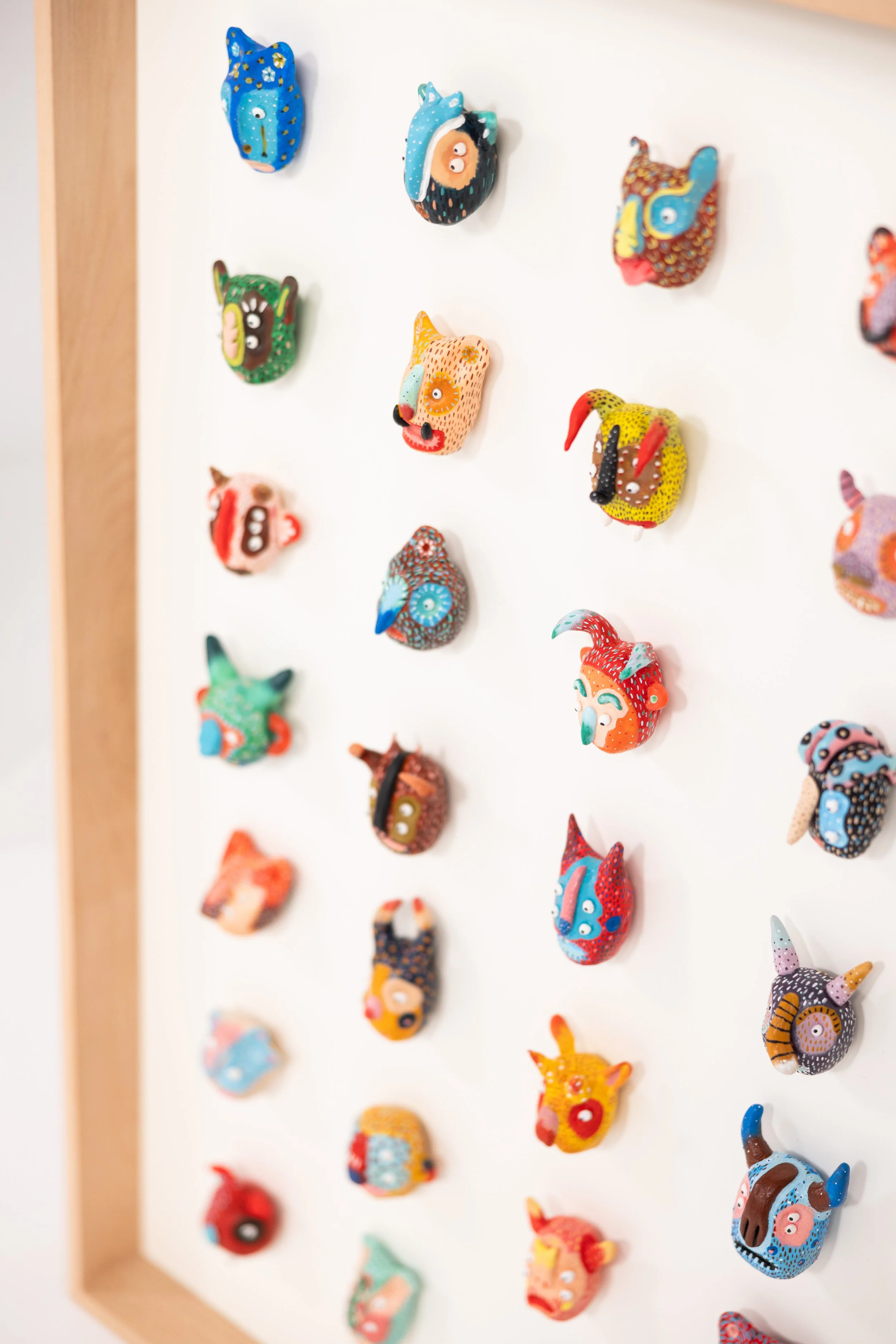
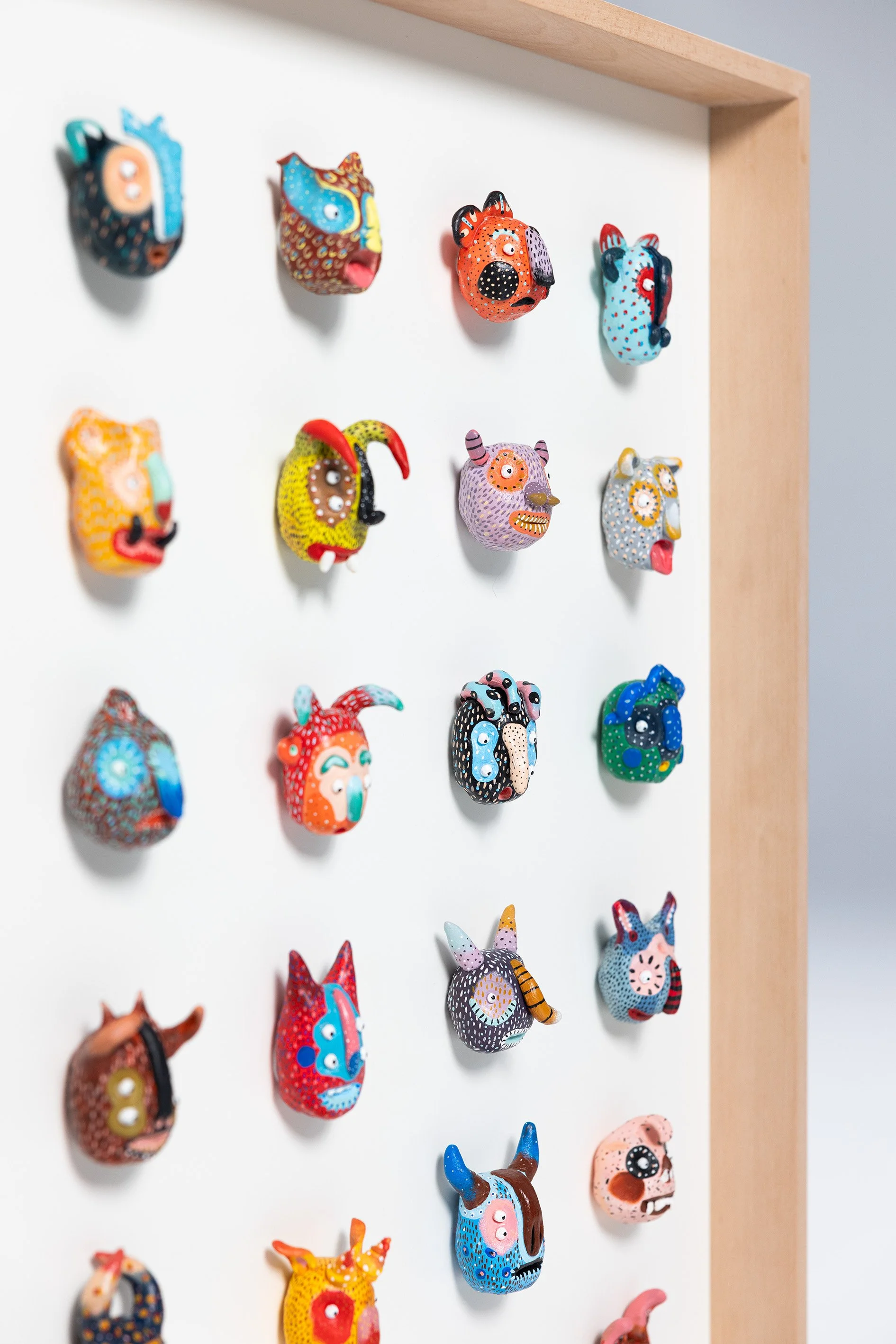
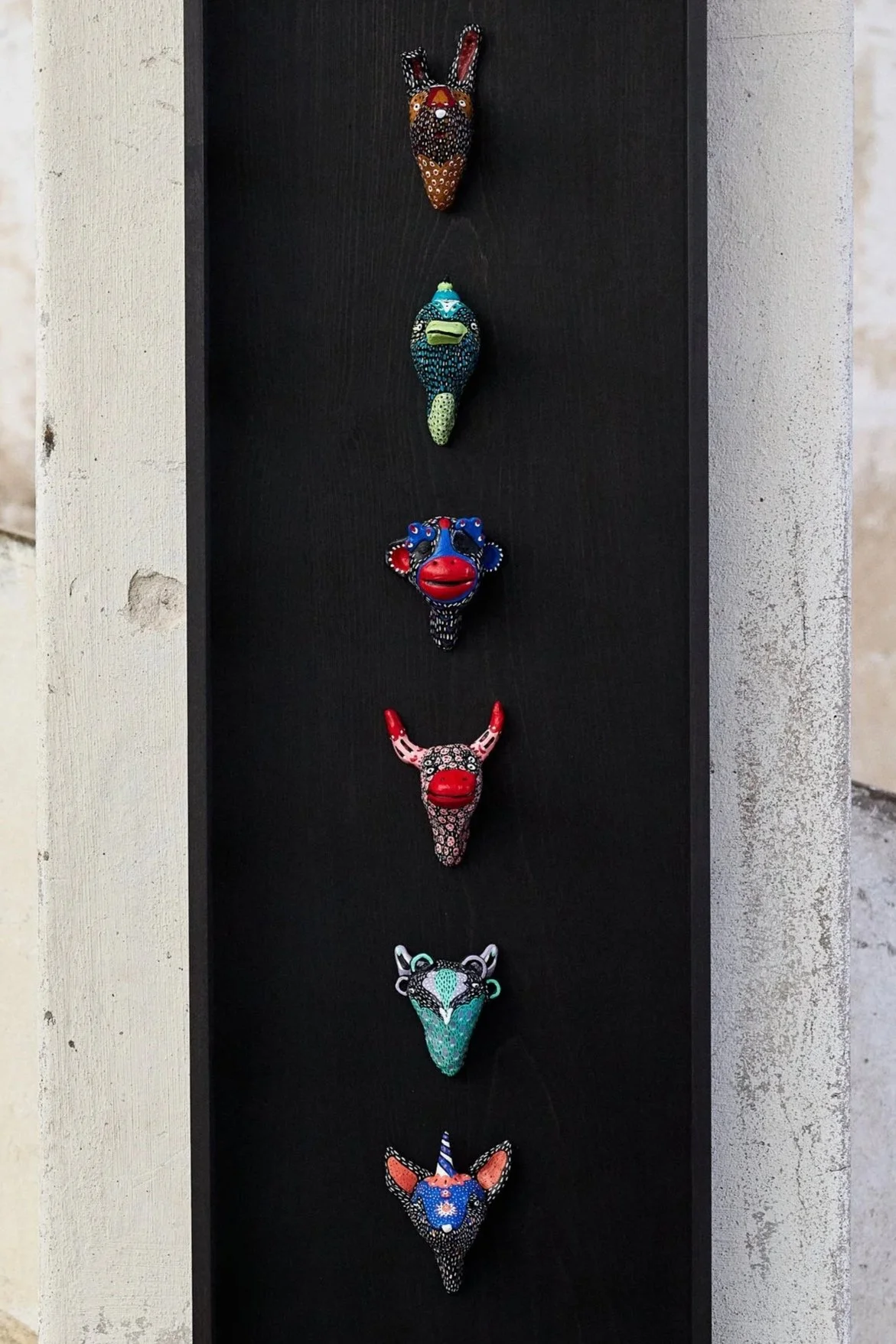
Masquerade explores the expressive potential of the miniature head through a visual language deeply informed by Latin American artistic traditions. Saturated colours, intricate patterns, and ornamental surfaces transform each head into a symbolic presence, where identity is concealed, reimagined, and celebrated through decoration rather than portraiture.
Drawing inspiration from the visual richness of Día de los Muertos, Oaxacan alebrijes, and broader South American craft traditions, the series embraces colour as a narrative and emotional force. Pattern becomes more than surface embellishment; it functions as a carrier of memory, ritual, and cultural resonance, dissolving the boundary between sculpture and ornament.
Masquerade exists in the tension between the collective and the individual, between concealment and revelation. The mask becomes a metaphor not for hiding identity, but for expanding it, allowing each miniature head to embody multiple cultural references, emotional registers, and imagined personas within a single composition.
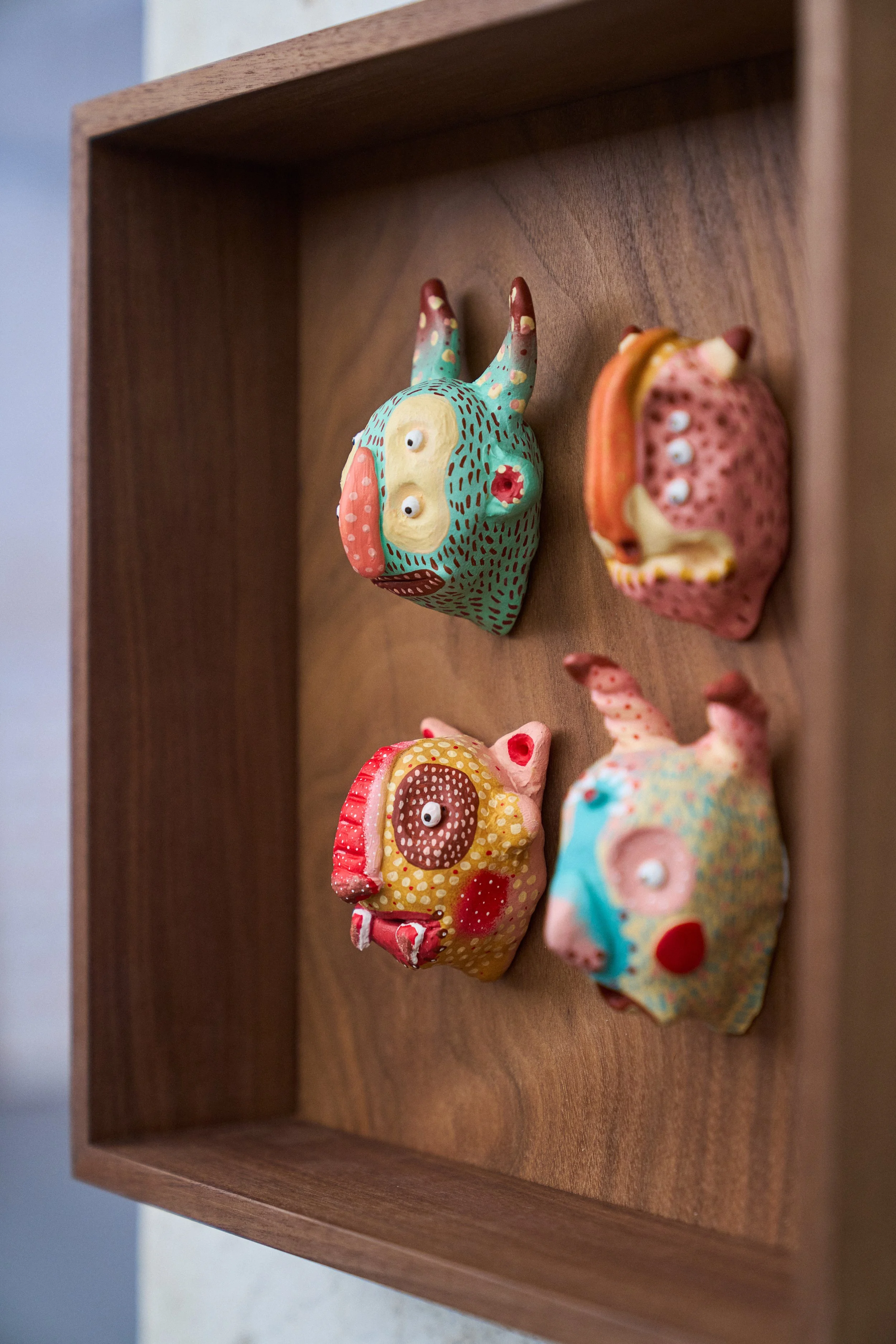
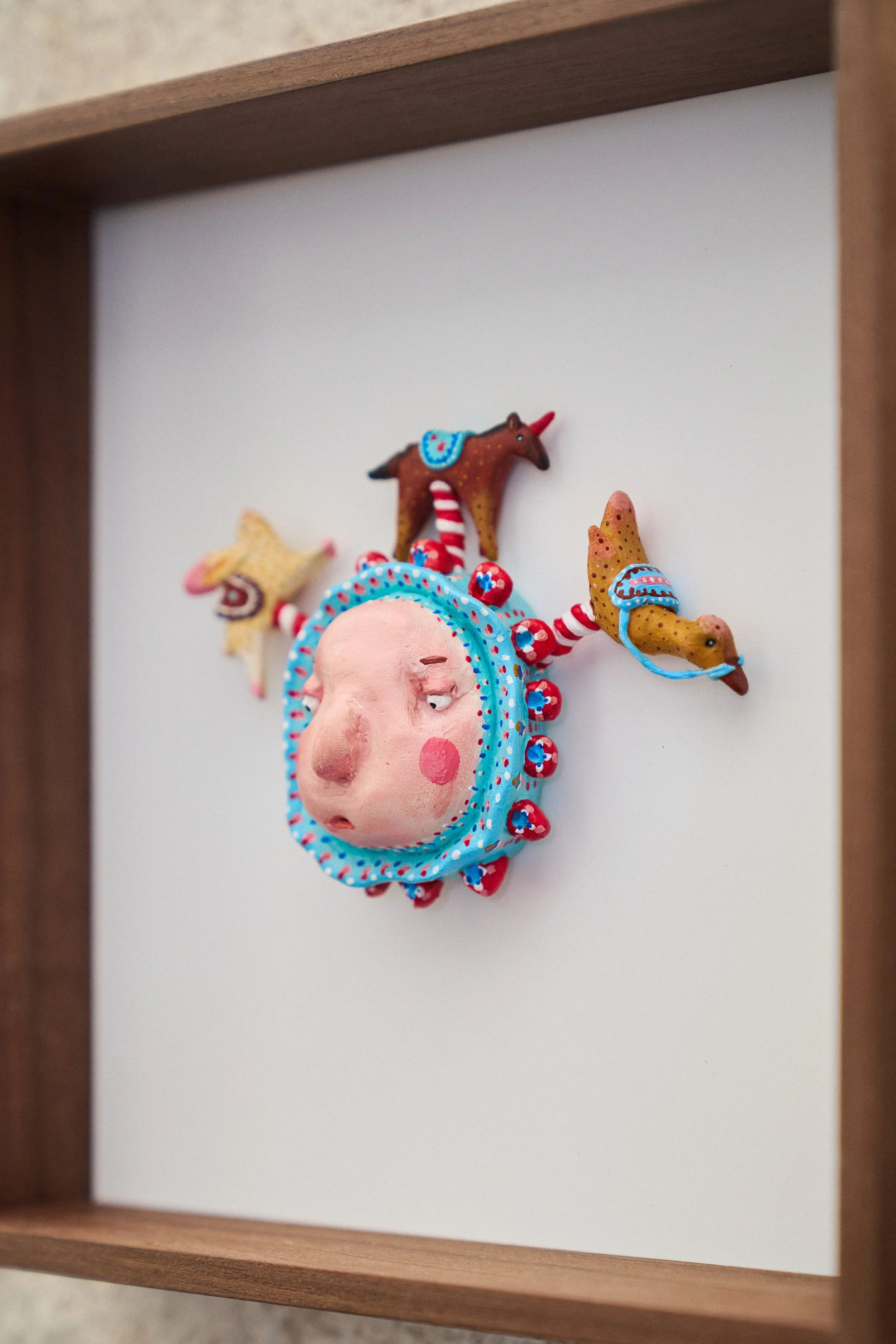
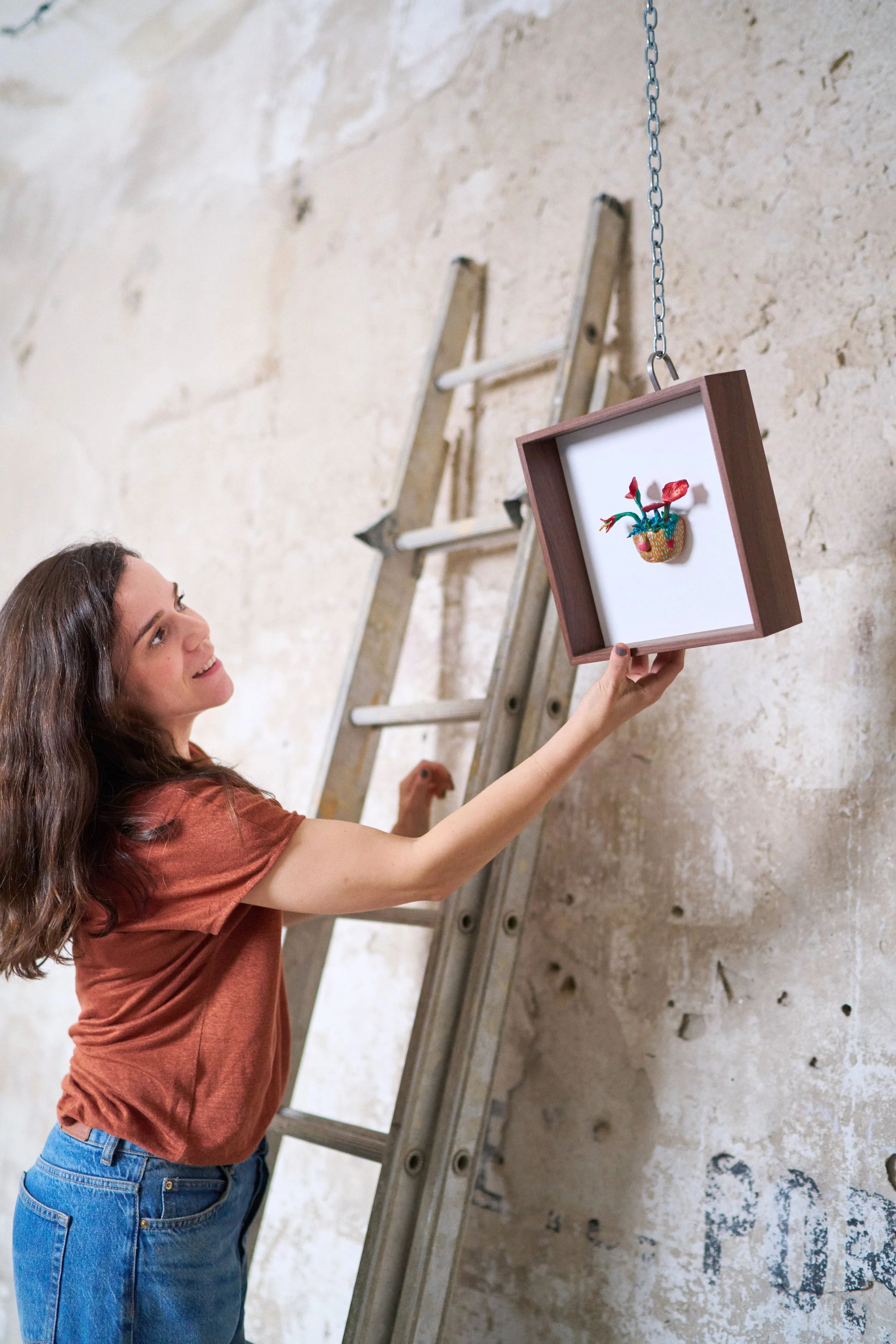
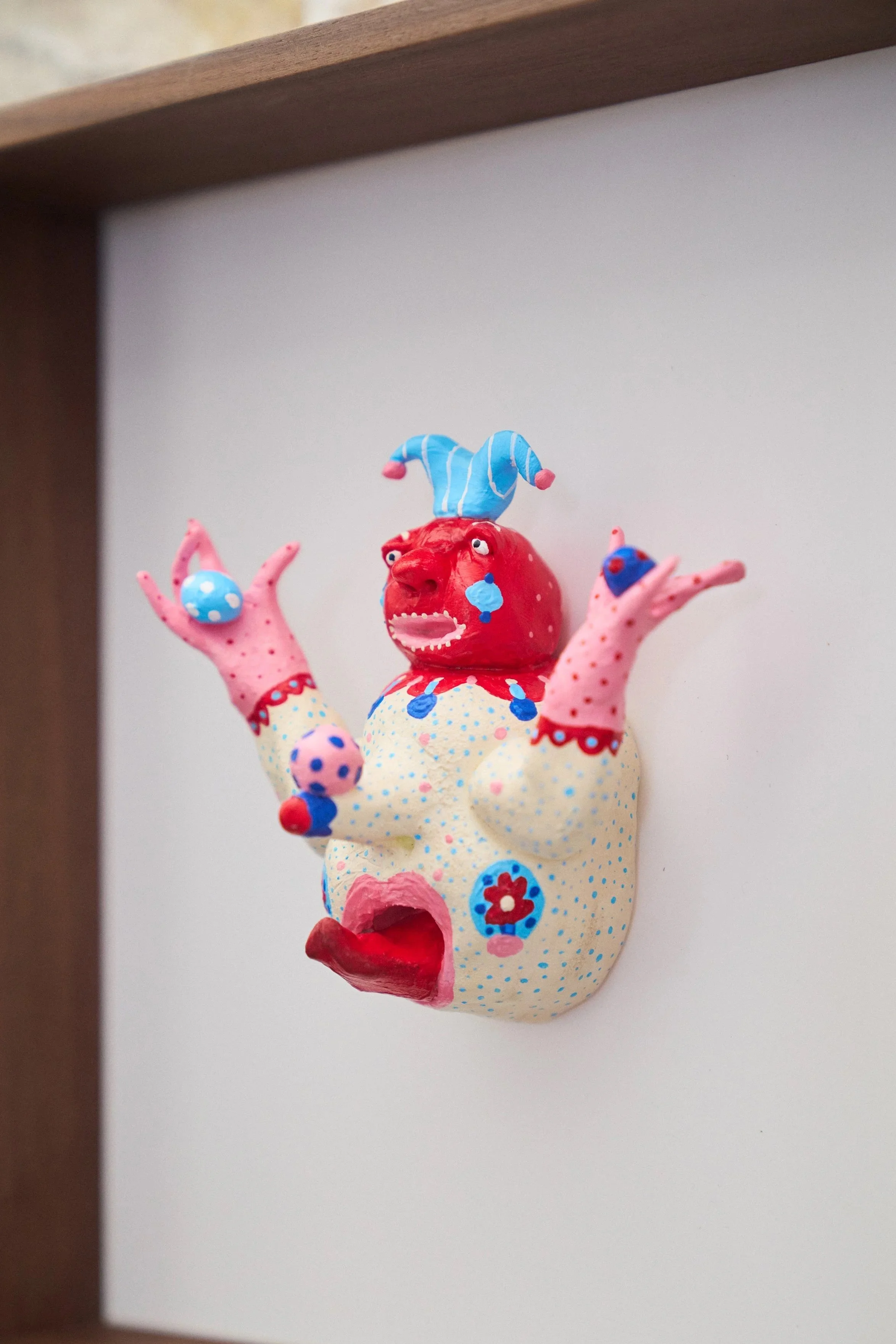
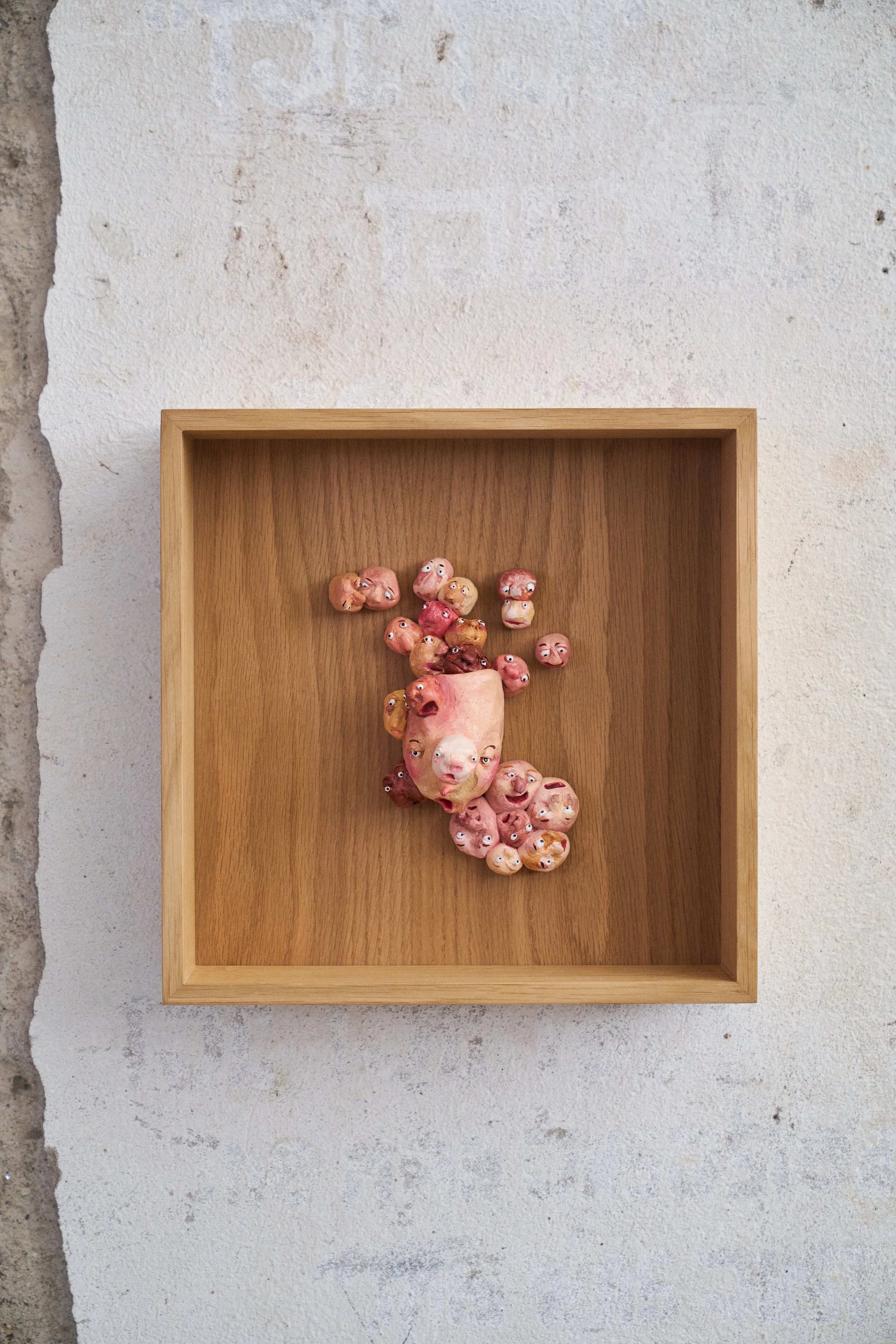
Carrousel brings together a series of small enclosed scenes, each composition functioning as a moment suspended in time.
Like fragments of an imagined narrative or snapshots from an invented world, these works invite the viewer into intimate spaces that, despite their scale, are rich in meaning.
Drawing on references to the circus, visual poetry, and surreal, slightly whimsical worlds, each box forms an autonomous microcosm. Displayed individually or as a group, the works engage in a subtle dialogue, inhabiting a territory where reality and imagination coexist within a confined visual space that encourages slow and contemplative viewing.